
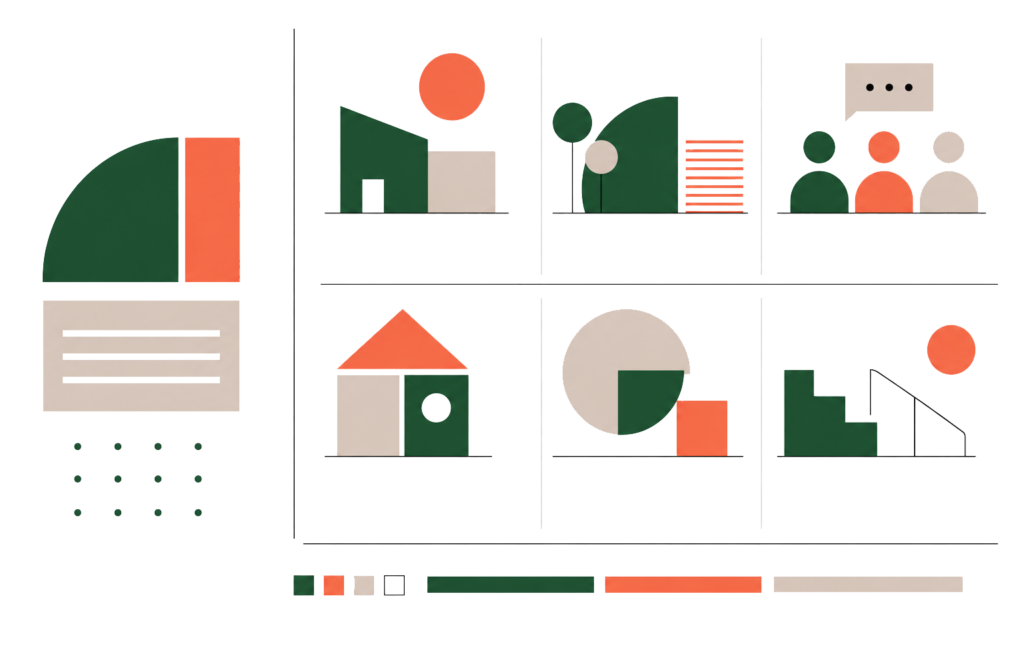
The proposed interventions form a comprehensive portfolio of architectural, environmental, and social design strategies aiming to redefine the role of the municipal building within the framework of the New European Bauhaus and the Near-Zero Energy Building (nZEB) approach. Rather than focusing exclusively on technical energy upgrades, the portfolio introduces a broader vision in which sustainability, aesthetics, and inclusion operate simultaneously and complementarily. The interventions combine conventional energy-efficiency measures with biophilic design solutions, place-based material applications, sensory spatial experiences, and participatory public-oriented actions. Inspired by the local natural ecosystems, cultural heritage, and everyday civic life of Pella, the proposed portfolio attempts to transform the City Hall into a resilient and climate-neutral civic landmark that enhances environmental performance while strengthening citizens’ sense of belonging, wellbeing, and engagement with the public space.
Intervention 1 – Insulation as an opportunity for facade development (English version) (Greek version)
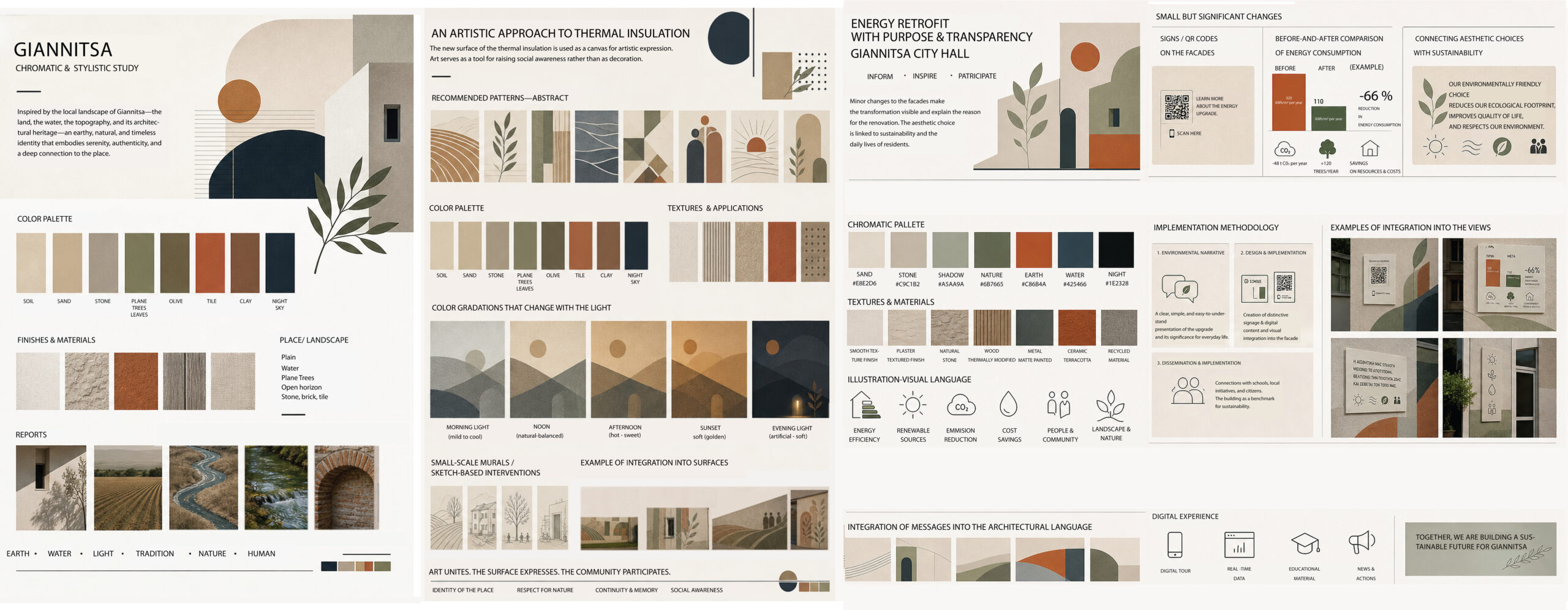
The insulation strategy is approached not only as a technical energy-efficiency measure but also as an opportunity to redefine the architectural identity of the building. Through the redesign of the façade envelope, the intervention improves thermal performance while simultaneously enhancing the visual quality, materiality, and environmental character of the municipal building. The façade becomes an active climatic and aesthetic layer that contributes to both energy reduction and the overall civic image of the City Hall.
Intervention 2 – Openings (English version) (Greek version)

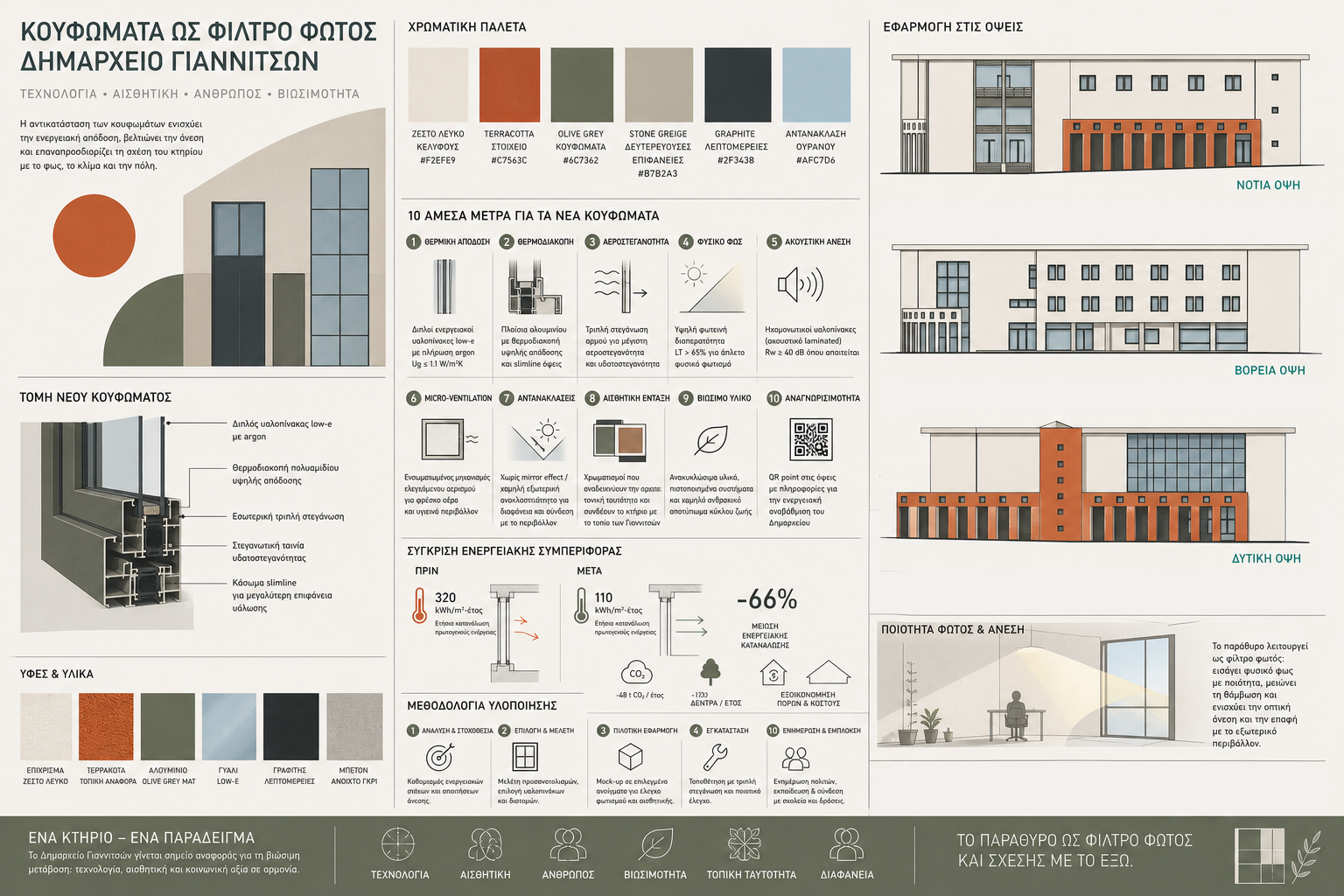
The redesign of the building openings focuses on improving daylight access, thermal comfort, natural ventilation, and visual connectivity between interior and exterior spaces. High-performance window systems are proposed to reduce energy losses while enhancing the spatial experience of users. The intervention also aims to strengthen transparency and openness, reinforcing the relationship between citizens and public administration.
Intervention 3 – Thermal pump (English version) (Greek version)
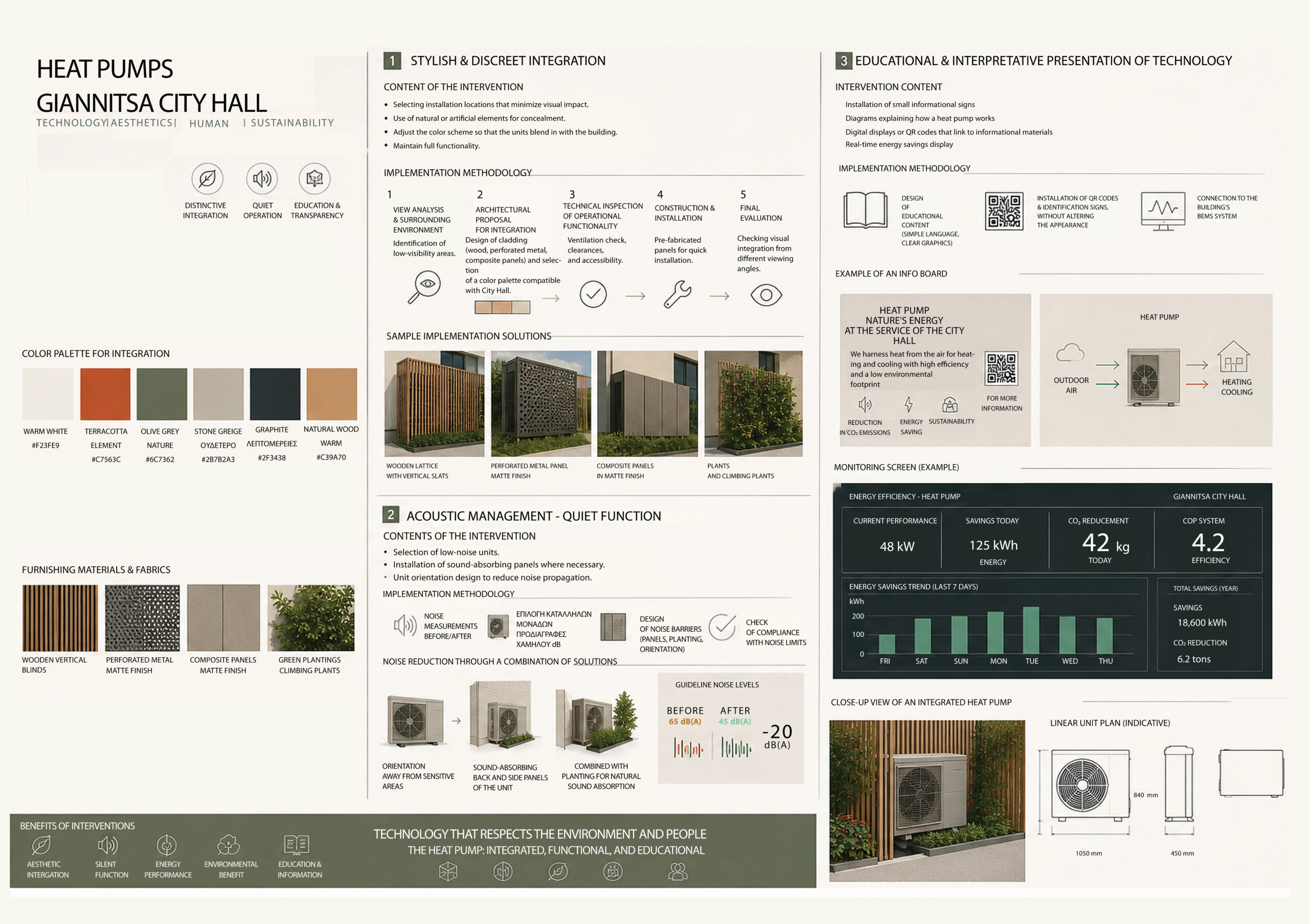
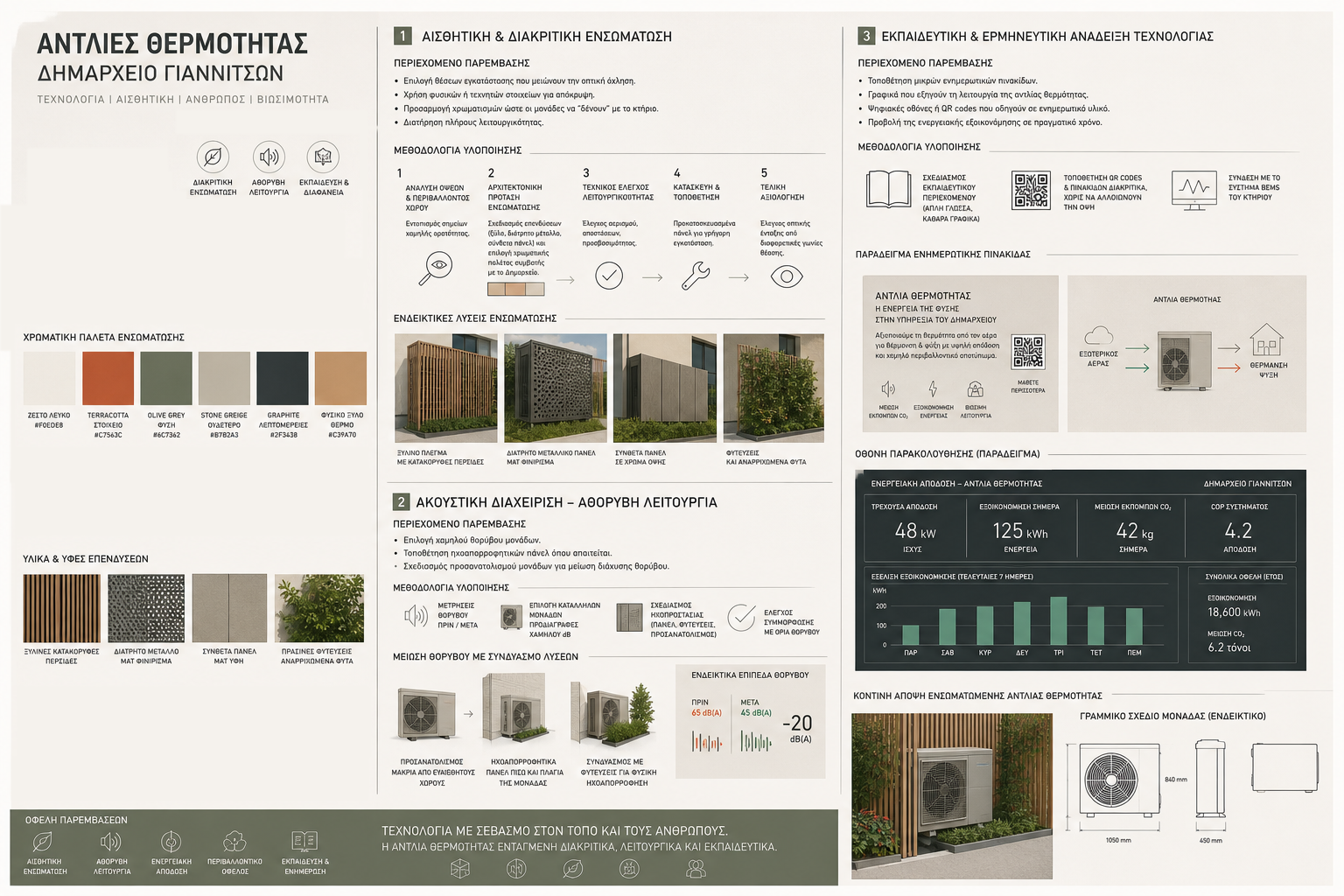
The installation of a modern heat pump system constitutes a key intervention toward achieving nZEB standards. The proposed system improves the building’s heating and cooling efficiency while significantly reducing fossil fuel consumption and greenhouse gas emissions. Combined with smart energy management strategies, the intervention contributes to the transition toward a low-carbon and climate-resilient public building.
Intervention 4 – Photovoltaic on a green roof (English version) (Greek version)
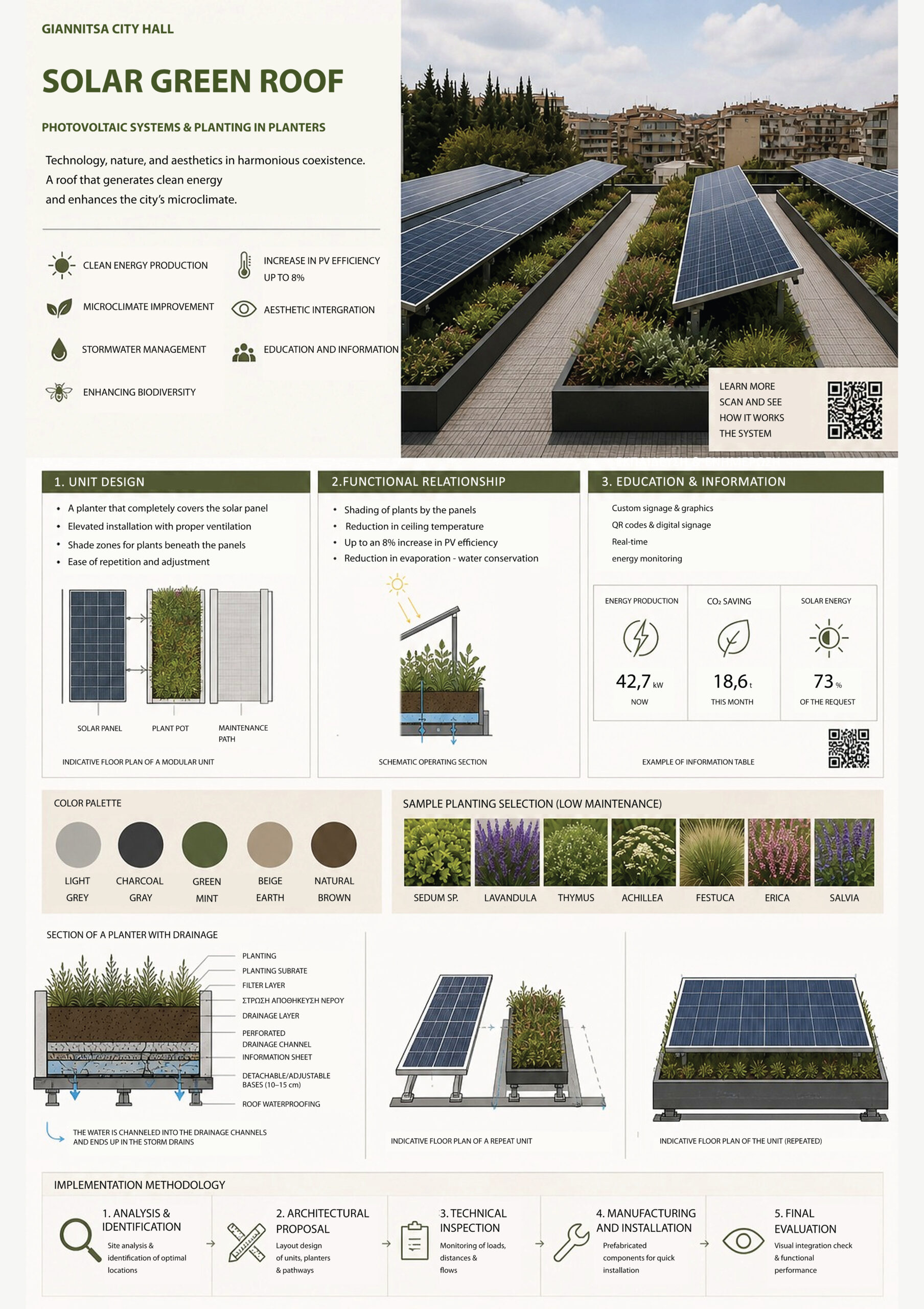

The integration of photovoltaic panels with a green roof system creates a multifunctional environmental infrastructure that combines renewable energy production with biodiversity enhancement and microclimatic improvement. The intervention contributes to energy self-production, rainwater management, thermal insulation, and urban ecological continuity, while transforming the roofscape into an active and visible sustainability element.
Intervention 5 – LED lights (English version) (Greek version)
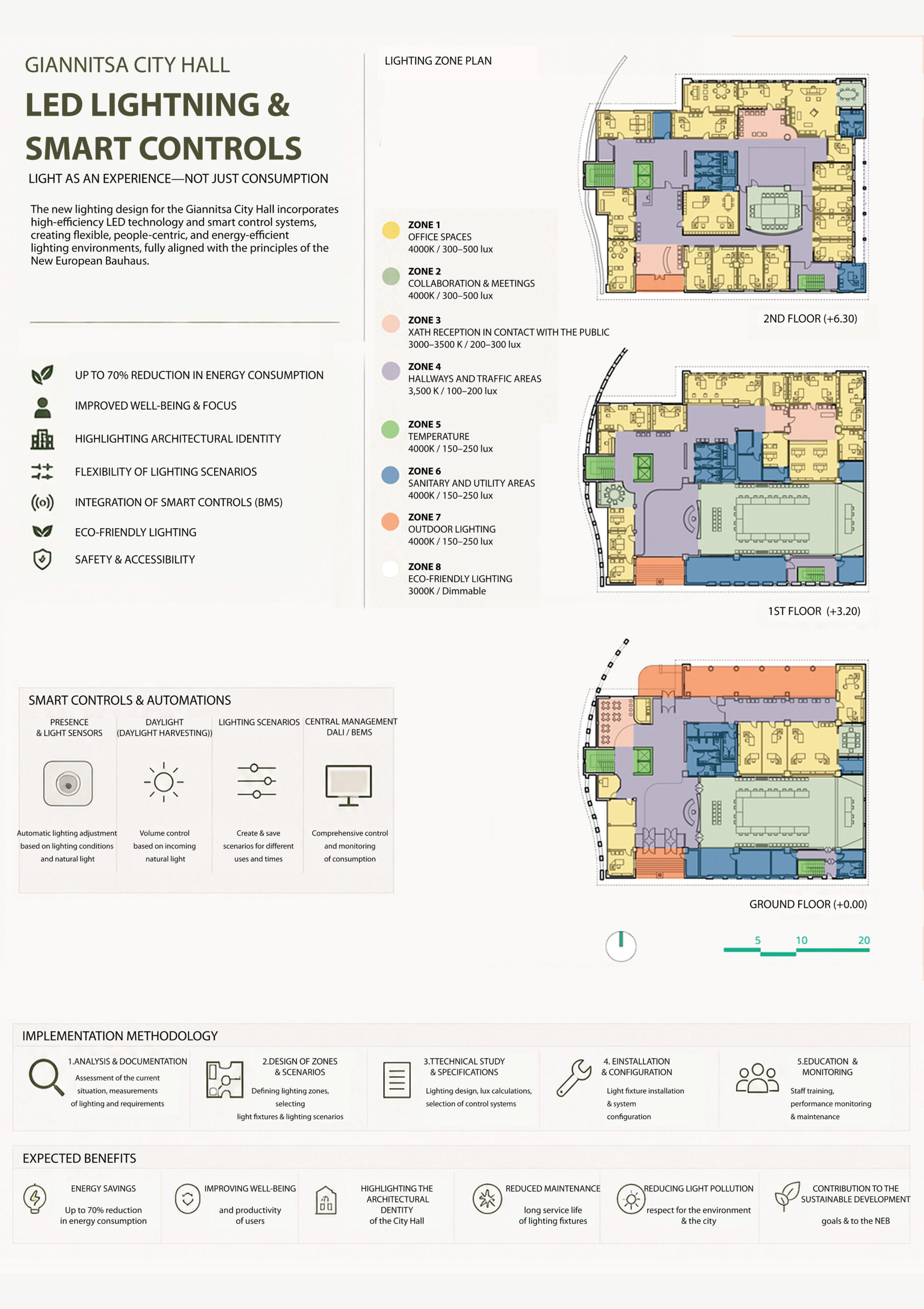

The replacement of conventional lighting systems with energy-efficient LED technology aims to reduce electricity consumption while improving visual comfort and user wellbeing. The intervention includes the development of a human-centric lighting strategy with appropriate intensity, color temperature, and spatial zoning, creating healthier and more pleasant working environments for employees and visitors.
Intervention 6 – BMS (English version) (Greek version)
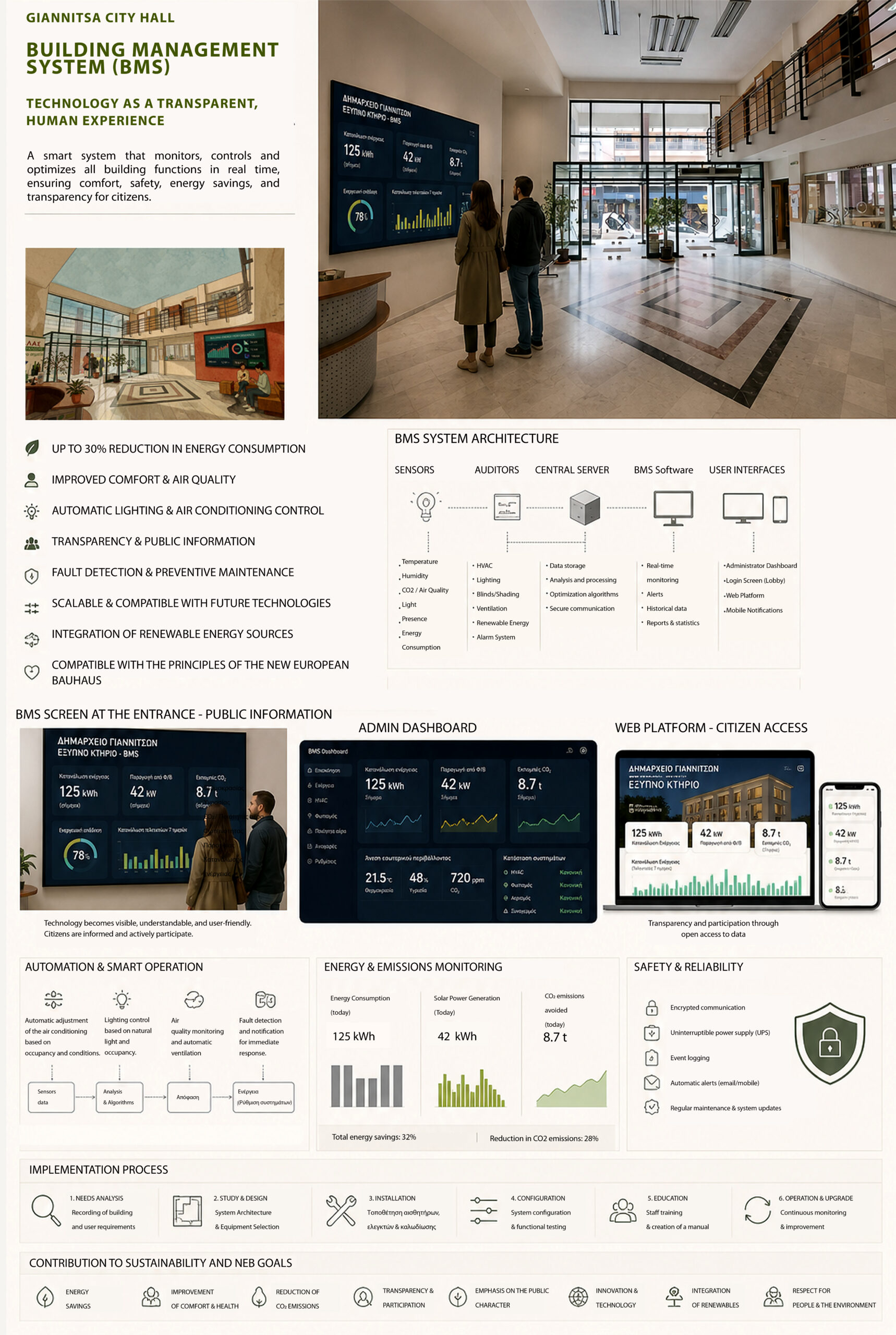
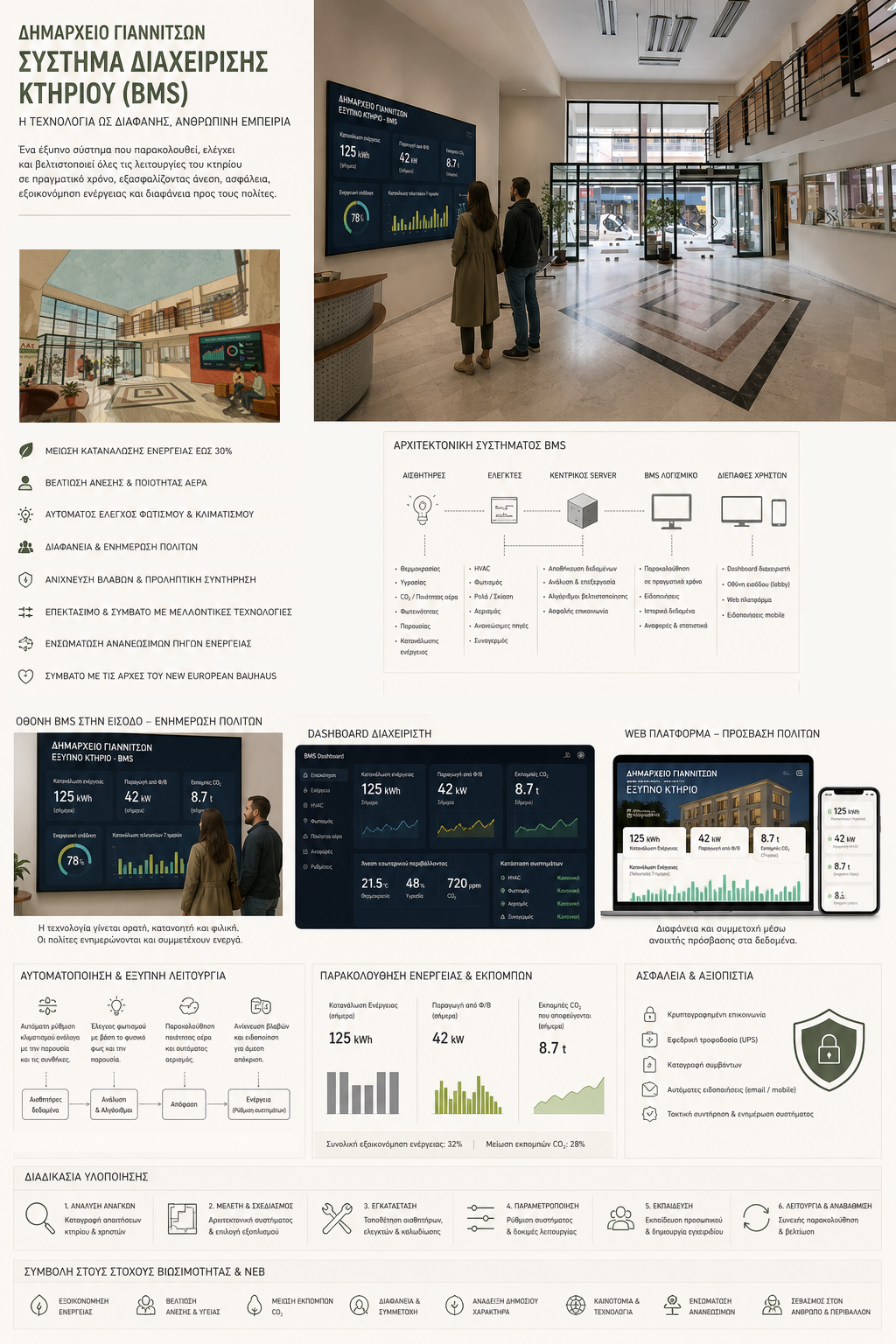
The implementation of a Building Management System introduces an integrated digital platform for monitoring and optimizing the building’s energy performance. The system enables real-time control of energy consumption, indoor environmental conditions, and technical equipment operation. In parallel, public dashboards and visual interfaces transform the building into a transparent educational environment, increasing public awareness regarding energy efficiency and sustainability.
Intervention 7 – Biophylic design (English version) (Greek version)
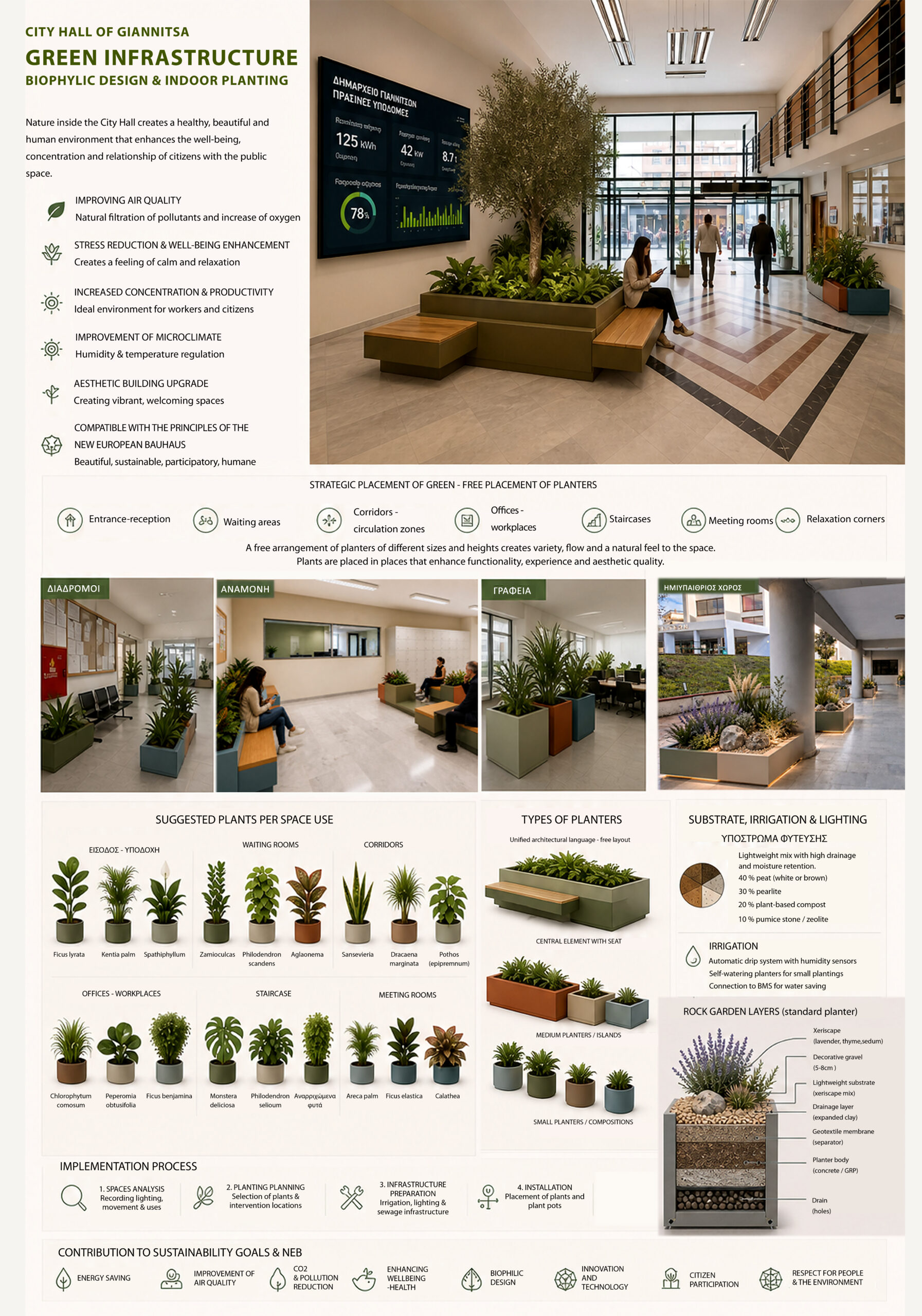
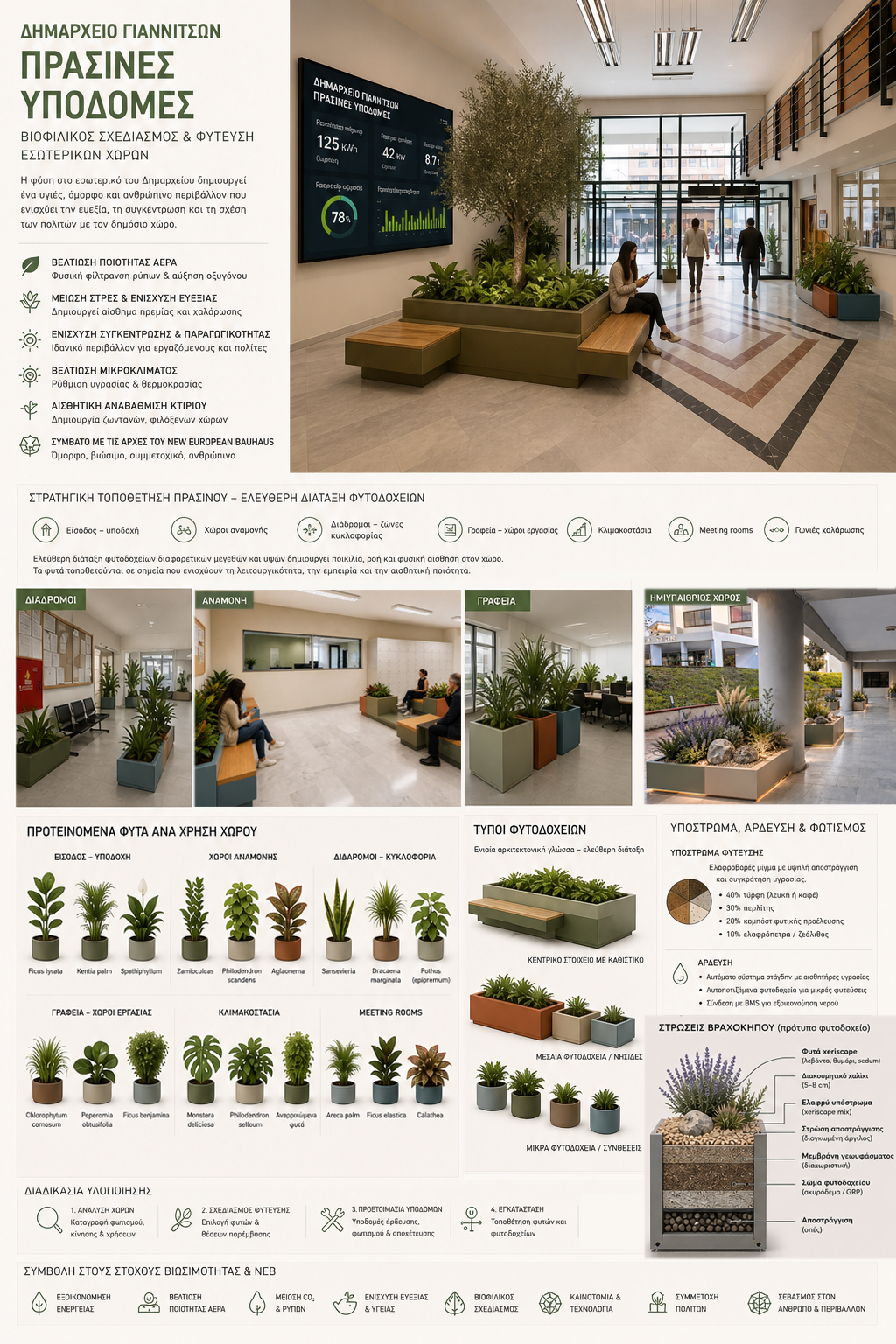
The biophilic design intervention introduces natural elements, vegetation, textures, and sensory experiences inspired by the local ecosystems of Pella into the interior and exterior spaces of the building. Through green corners, natural materials, and biodiversity-inspired design, the intervention aims to improve wellbeing, indoor environmental quality, psychological comfort, and the emotional connection between users and the built environment.
Intervention 8 – Inclusivity and accessibility (English version) (Greek version)
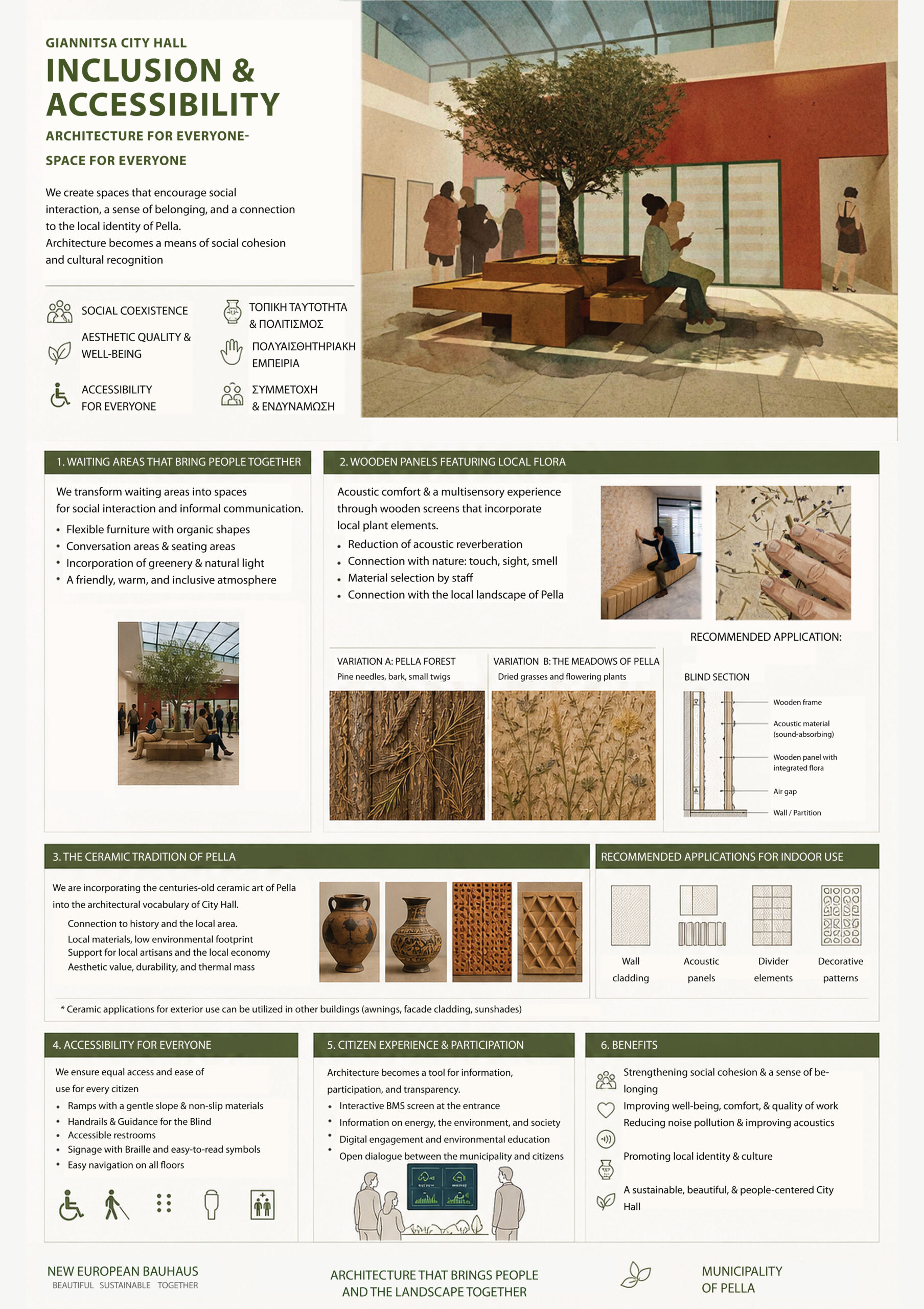
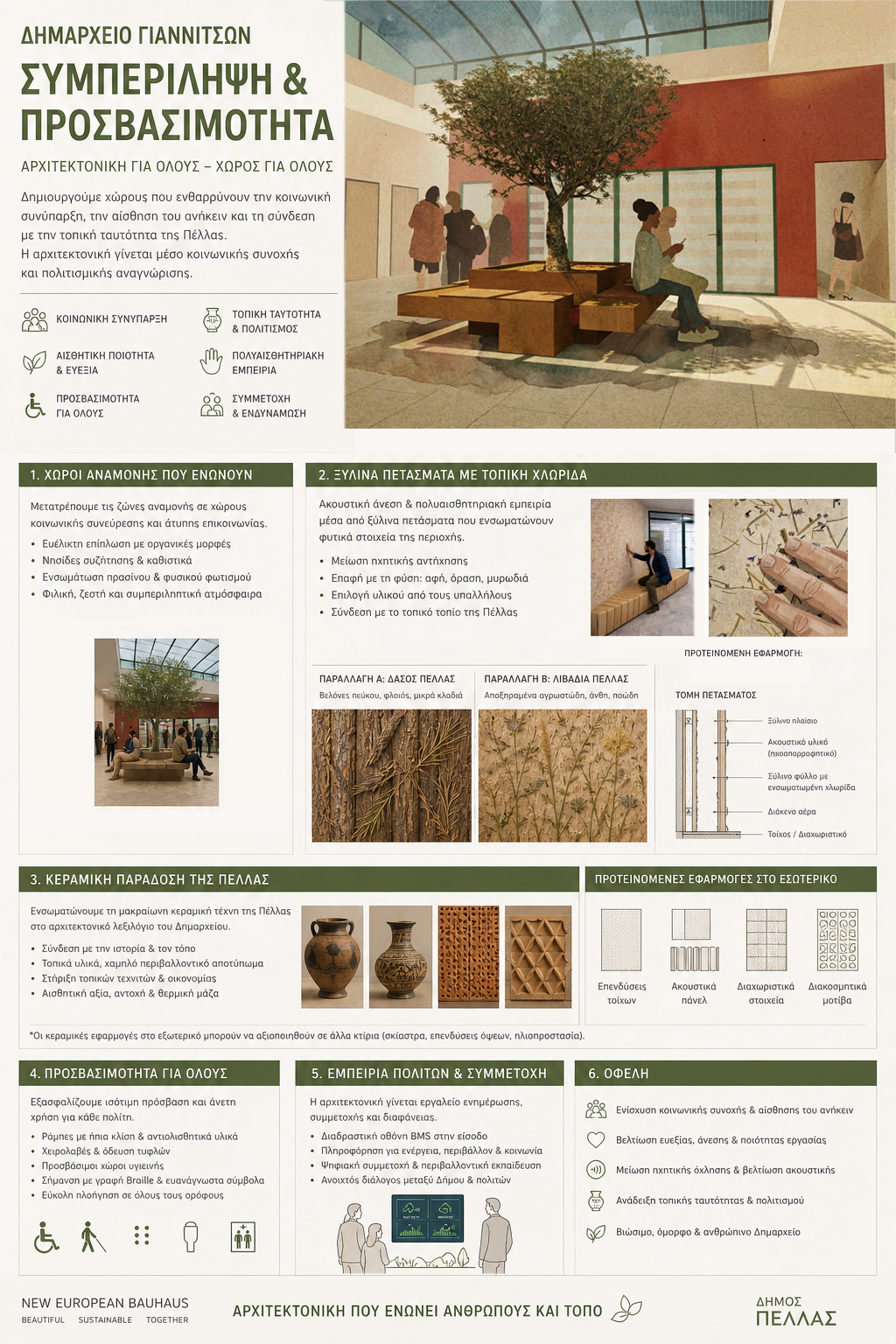
The intervention focuses on strengthening the inclusivity and accessibility of the municipal building by improving spatial permeability, wayfinding systems, and universal access conditions. The design approach aims to create welcoming and socially inclusive public spaces that can be comfortably experienced by all citizens regardless of age, gender, or physical ability. The intervention reinforces the role of the City Hall as an open and democratic civic environment.